The hair
A material study
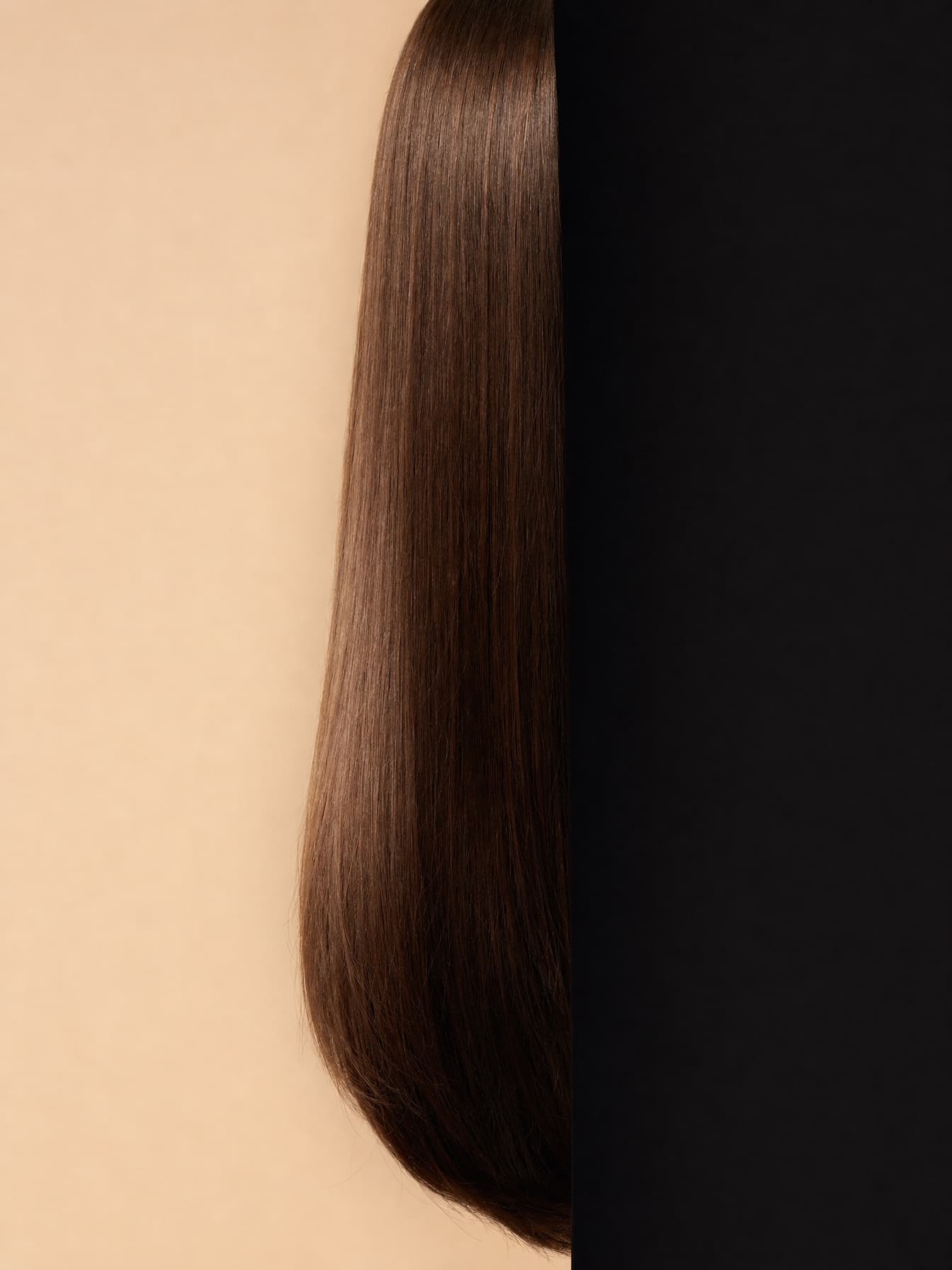
Almost all extension hair sold in the world passes through the same industrial process. Bundles are collected from many heads, mixed, and dropped into an acid bath that dissolves the cuticle, the shingled outer layer that makes hair behave like hair. What remains is a smooth, dead fibre. It is then coated in silicone so it feels finished on the shelf. The coating survives perhaps fifteen washes. The hair does not recover.
Russian hair is collected differently and behaves differently. It comes from a single donor, cut in one tail, so every strand still faces the direction it grew. Nothing needs to be burned away. The cuticle stays on, the shingles stay aligned, and the hair keeps doing what living hair does: holding moisture, taking colour evenly, falling with weight instead of static.
Density is structure
A tail of Russian hair is dense from root to end. It has not been thinned to stretch supply across more packets. When it is made into a weft, the ends finish full. This is the difference you can see across a room: not shine, which any silicone can fake for a month, but the way the last two inches of the hair carry weight.
Alignment is longevity
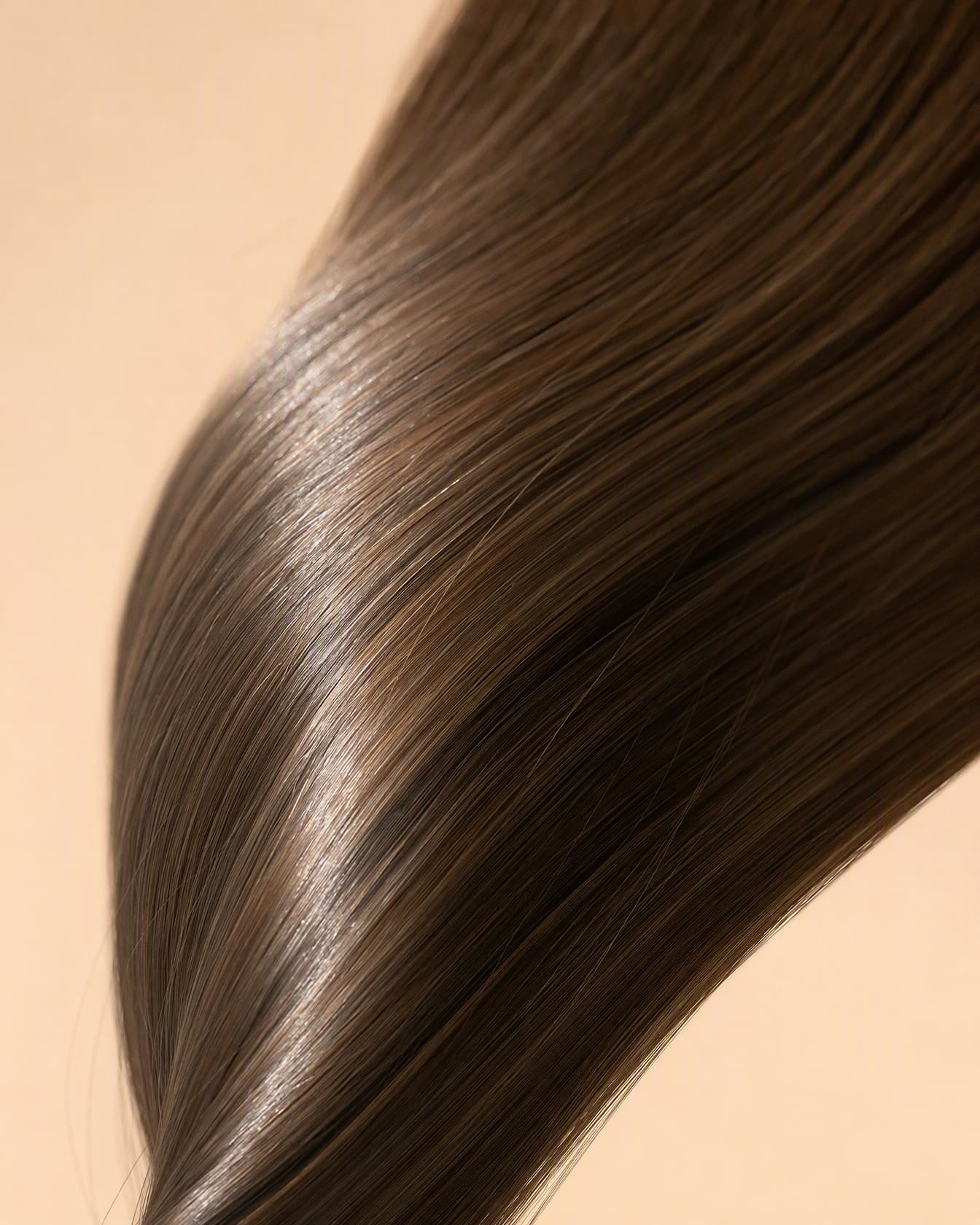
Cuticles aligned in one direction slide past each other. Cuticles facing both directions lock like burrs, which is why processed hair mats at the nape within weeks and must be replaced within a season. Aligned hair, cared for properly, wears for a year or more and is re-seated rather than repurchased. The economics favour the better material.
Movement is the proof
The final test is not conducted in a salon chair. It happens when you turn your head. Hair with intact cuticle and honest density moves in one piece from the root, settles, and finds its fall again. That movement cannot be coated on. It is either in the material or it is not.
This is why we do not sell hair by the packet. A material this specific deserves to be matched to your shade under your light, to your density, to the method your own hair can carry. That is a conversation, and it is the only place we begin.